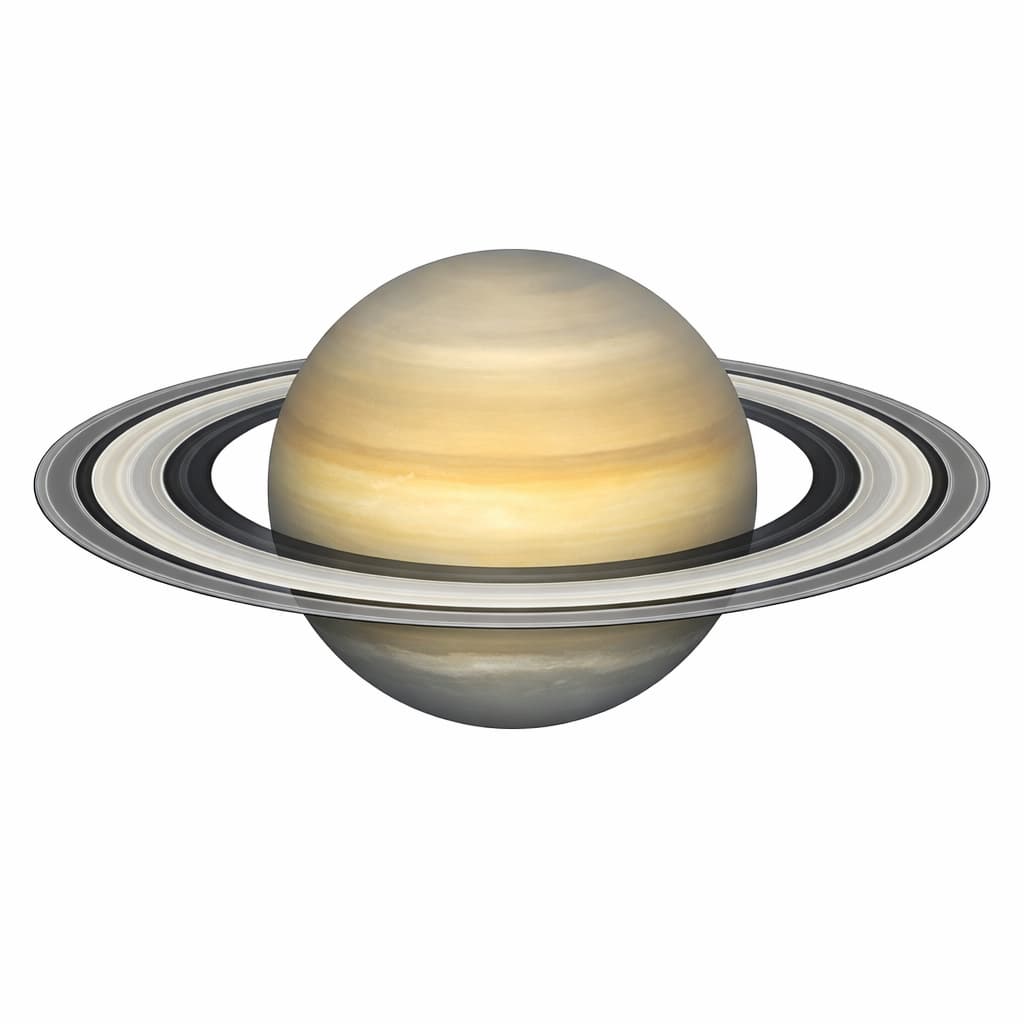
Understanding Saturn in Astrology: The Architect of Reality
Saturn ♄ represents life’s most important lessons. However, its lessons cannot be rushed. Success under Saturn usually comes slowly. Unlike Jupiter’s sudden opportunities, Saturnian achievements are earned gradually through continuous effort. However, the rewards are often much more lasting. Whenever you encounter a persistent challenge that demands patience and effort, Saturn is usually involved. However, Saturn never creates obstacles without also offering a path toward mastery. This planet is connected with discipline, structure, responsibility, and perseverance.
In traditional astrology, Saturn was known as the “Greater Malefic”, making it one of the most intimidating planets in the zodiac. However, a “weak” or challenging Saturn doesn’t mean you are cursed. It simply indicates where you must face your fears and work harder to earn your rewards. Saturn is the furthest planet visible to the naked eye and was the outermost known planet in ancient times. It was named after the Roman god Saturn, associated with time and harvest, equivalent to the Greek god Chronos. Its symbol, ♄, represents Chronos’ sickle, symbolizing the idea that we reap what we sow. Although Saturn’s energy is often considered heavy, it serves an essential purpose. Without Saturn, there would be no order or structure. It governs time, persistence, responsibility, and discipline.
Saturn reflects the need for security, control, and stability. Since these themes align strongly with practicality and material reality, Saturn naturally rules the earth sign Capricorn. Capricorn is known for ambition, determination, patience, and a realistic approach to life. Through Capricorn, Saturn is connected with the tenth house of career, authority, and social status. Saturn is exalted in Libra, weakened in Aries where it is in fall, and in detriment in Cancer and Leo, signs where its energy struggles to express itself naturally. Saturn takes around 29 years to orbit the Sun, spending roughly two to two and a half years in each zodiac sign. Saturn is strongly connected with systems, institutions, rules, governments, and hierarchies. This planet governs obligations, duties, and authority figures. Saturn energy involves doing what is necessary, even when it is difficult or unpleasant.
Core Themes and Keywords
To understand Saturn, consider these fundamental concepts:
Structure & Discipline: The “bones” of any project or life path.
Time & Delay: The understanding that quality requires patience.
Authority & Career: Your relationship with bosses, the government, and your own professional ambition.
Limitations: The boundaries that define our reality.
Responsibility: The obligations we must fulfill, whether we like them or not.
Slow, Steady, and Permanent
Saturn is the furthest planet visible without a telescope, marking the traditional boundary of our solar system. Named after the Roman god of time (Chronos in Greek), its symbol—the sickle ♄—serves as a reminder that “we reap what we sow”.
The Skeletal System: Just as Saturn provides structure to the cosmos, it rules the rigid parts of the human body: the bones, teeth, skin, ligaments, and knees.
The Energy of Contraction: While Jupiter expands, Saturn contracts. It represents the solid state of matter and our innate need for security and stability.
Zodiac Rulership: Saturn is the natural ruler of Capricorn (ambition and persistence) and the traditional ruler of Aquarius. It is at its strongest (exalted) in Libra, but struggles (detriment/fall) in Aries, Cancer, and Leo, where its cold, disciplined nature clashes with heat and emotion.
The Cycle: It takes roughly 29 years to orbit the sun, spending about 2.5 years in each sign.
The Taskmaster: Life’s Hardest Lessons
Often called the “Taskmaster” or “Great Teacher”, Saturn’s role is to test your maturity. If you encounter a problem that feels like a brick wall—whether in finances, romance, or health—you are likely facing a Saturnian lesson.
Identifying Patterns: If you struggle repeatedly in one specific area, check Saturn’s house placement in your birth chart. That area is where you are asked to develop immense patience and commitment.
The Reward of Time: Saturn rewards those who act with focus and maturity. It may cause delays and frustration, but the success you achieve under Saturn is permanent. Unlike the “flash in the pan” luck of other planets, Saturnian success stands the test of time.
Maturity and Boundaries
Saturn represents the “winter” of the soul—a time when resources are scarce and only the disciplined survive.
Self-Esteem: Many Saturnian challenges manifest as low self-confidence. By facing the “harshness of reality” and setting healthy boundaries, you eventually build an unshakeable sense of self-worth.
Wisdom of Age: Saturn rules the elderly and the wisdom that only comes with experience. As you grow older, you usually become better at “playing by Saturn’s rules,” finding that your hard work finally pays off in your later years.
Career and Authority
As the ruler of the Tenth House, Saturn governs your public image and professional life.
Traditional Paths: It is linked to “serious” professions such as science, the military, government work, or research.
Hierarchy: Saturn respects the rules and the chain of command. It represents the “boss” figure and your own ability to become an authority in your field.
The Saturn Return: The Cosmic Wake-Up Call
Every 29 to 30 years, Saturn returns to the exact spot it occupied when you were born. This is the famous “Saturn Return”. This period is often a major turning point. Saturn evaluates whether you have matured and taken responsibility for the themes connected to its natal house placement.
The Test: In your late twenties, you have your first return where Saturn checks to see if you’ve actually grown up. It is a period of high pressure where many people make major “adult” commitments, like buying a home or starting a family. In your second return, around age 56-58 you can face questions such as “am I being true to myself and authentic to follow what my soul really wants?”
The Correction: If you’ve been drifting or avoiding responsibility, the Saturn Return can feel like a harsh wake-up call. However, for those who have put in the work, it is a time of significant promotion and the solidification of your life’s purpose.
Summary: Saturn is not your enemy; it is your “coach”. It teaches you that while the road is long and the work is hard, the character you build along the way—and the success you eventually achieve—will be yours forever. If you have been avoiding responsibility or following the wrong path, Saturn often brings a wake-up call during this period. It reminds you that time is limited and encourages you to build a more meaningful and stable life. At the same time, Saturn rewards genuine effort. The achievements gained through Saturn tend to remain with you for many years because they are built on discipline, persistence, and experience.
Understanding Saturn Retrograde
In the astrological world, Saturn is often identified as the “Great Malefic”. It carries a reputation for being cold and uncompromising, as it governs the heavy themes of time, karma, duty, and maturity. As the traditional ruler of both Capricorn and Aquarius, Saturn acts as the zodiac’s lead architect, shaping how we handle social standing, external authority, and personal self-control.
Once a year, Saturn appears to drift backward from our perspective on Earth, a phase that lasts about four and a half months. Because it spends roughly 36% of the year in this state, its retrograde influence is a frequent and significant occurrence.
Amplified Boundaries: Unlike other planets that might feel “weakened” while retrograde, Saturn’s restrictive energy is often intensified. This period frequently brings “reality checks” and forces us to confront lessons we may have ignored.
Karmic Accounting: During this time, the “Lord of Karma” settles the score between our past actions and our future potential.
The Fair Teacher: It isn’t all about punishment. If you have been diligent and hard-working while Saturn was moving direct, the retrograde period can actually deliver the rewards and recognition you’ve earned.
The Effects of the Retrograde Transit
Saturn governs the structures and limits of our lives. When it stations retrograde, the atmosphere changes:
Review and Refine: This is a prime season for looking back at how we handle our responsibilities. It is an ideal time to examine the “foundations” of our lives to ensure they are durable enough to last.
Temporary Relief: In some cases, the retrograde can feel like a brief break from the heavy pressure or “burden” usually associated with Saturnian transits.
Extended Influence: Because Saturn moves so slowly, a retrograde can cause a specific transit to linger for up to eleven months. This is why Saturn often feels like the dominant theme of an entire year.
Saturn Retrograde in the Natal Chart
Having Saturn retrograde in your birth chart is quite common. Traditionally, retrograde planets were viewed as “weakened” because they lacked the speed and visibility valued by ancient astrologers. In modern terms, it often means the planet’s energy is turned inward.
The Internal Patriarch: Saturn helps us develop an “inner authority.” When retrograde at birth, this can suggest a childhood where a father figure was distant or absent, potentially making it harder to build self-confidence or set firm boundaries later in life.
The People-Pleaser Trap: Those with this placement might struggle to say “no,” often feeling an underlying sense of inadequacy or a nagging guilt that their best efforts are never quite enough.
Delayed Success: The influence of a natal retrograde Saturn often matures later in life. Success comes through deep introspection and learning to tell the difference between a helpful “inner critic” and a voice that is simply being cruel.
Summary: Whether in transit or in your birth chart, Saturn Retrograde is an invitation to slow down and do the work right. By mastering self-discipline and facing your fears, you can transform Saturn’s “harshness” into an unshakeable foundation for success.
Saturn in Aries (or 1st House): The Weight of Early Responsibility
Having Saturn in the First House (or in Aries, as it’s the same energy) of your birth chart is widely recognized as a demanding placement. Because Saturn symbolizes hurdles and restriction, its presence in this angular “House of Self” often translates to a childhood marked by significant challenges. The authority figures in childhood were often traditional, conservative, or strongly focused on discipline and responsibility. Parents may have seemed cold, demanding, or emotionally distant. People had to rely on themselves from an early age, as support from family may have been limited or non-existent. Furthermore, individuals with this alignment tend to be their own harshest critics. They were likely forced to grow up too early in their childhood and might have “missed out” important stages in life.
It can indicate that parents or caregivers expected them to “shoulder” responsibilities and care for others long before they were emotionally ready. As a result, they may appear distant, serious, or emotionally guarded. Expressing emotions can be difficult. The consequence of this can be the “late bloomer” effect, delays and stagnation that often doesn’t make them move forward until later in life. This might have increased their frustration and anxiety throughout their life and had a negative effect on their self-worth that could have led to body insecurity and extreme introspection. Saturn’s energy tends to prioritize duty over enjoyment. When Saturn is very close to the ascendant, its influence becomes even stronger. This placement can resemble the qualities often associated with Capricorn rising. A difficult childhood can strongly affect self-esteem, and many people with this placement struggle with confidence early in life. This can make forming friendships or feeling accepted more difficult, though confidence, strength and self-acceptance usually improves steadily with age and experience.
An Accelerated Path to Maturity
If your Saturn is in the first house, your early years likely lacked the lightheartedness typical of childhood.
The “Pillar” of the Family: You were likely forced to grow up long before your peers. Whether you had to care for a relative or handle adult problems, you carried a heavy burden on your shoulders from a tender age.
Reserved Persona: To the outside world, you often appear serious, stern, or even unapproachable. The first house governs the energy you project; consequently, Saturn here acts as a filter that can suppress your emotional expression, making you seem older and more responsible than you actually are.
Missing Milestones: Because you were focused on being the “provider” or the “mature one,” you might have missed out on typical adolescent experiences, such as carefree friendships or early romances. In astrology, Saturn’s discipline rarely leaves room for spontaneous fun.
The “Late Bloomer” Effect
One of the most fascinating aspects of this placement is its unique relationship with aging.
Reverse Aging: While you may have looked and acted “old” as a child, people with Saturn in the first house often seem to grow younger as they age.
Post-Saturn Return Growth: Life usually takes a dramatic turn for the better after your Saturn Return (around age 28). This is the point where you often finally “bloom,” gaining the self-confidence and happiness that eluded you in your youth.
The Gift of Grit: The silver lining of a tough upbringing is the development of incredible self-discipline and persistence. You are intimately familiar with hard work, and this work ethic becomes a massive asset in your adult life.
Relationship with Authority and Self-Image
Saturn in the first house often points to a complex dynamic with parental figures.
Strict Upbringing: You likely grew up under the watch of a very demanding, traditional, or emotionally distant parent. Their high expectations and judgmental nature may have caused you to internalize a “strict inner judge” that continues to critique you today.
Internalized Anxiety: This placement can manifest as deep-seated shyness, guilt, or anxiety. Because these fears are located in the house of identity, it can be difficult to feel relaxed or spontaneous when meeting new people.
Self-Esteem Hurdles: Early experiences of being judged or isolated can lead to low self-worth. Others may perceive your natural reserve as unfriendliness, which can inadvertently reinforce your feelings of being unaccepted. Surrounding yourself with encouraging, loving people is vital for your growth.
Saturn Conjunct the Ascendant
When Saturn sits directly on the Ascendant (the cusp of the first house), its influence is at its peak, often giving the native a “Capricorn-like” vibe regardless of their actual rising sign.
The Physical Body: This placement can indicate a difficult or delayed birth process. Physically, it often produces a slim or seemingly fragile frame. You likely prefer a “classic” or understated personal style over anything flashy.
Body Insecurity: In your younger years, you may have felt extremely self-conscious or uncomfortable in your own skin. This shyness usually fades as you mature and learn to appreciate your inherent elegance and strength.
Summary: While growing up with Saturn in the first house is undoubtedly a struggle, it produces an individual of immense character and resilience. By working through your early fears, you eventually transform your “burden” into a position of respected authority and lasting self-assurance.
Saturn in Taurus (or 2nd House): Building Value from the Ground Up
Having Saturn in the Second House (or in Taurus, as it’s the same energy) often carries deep fears connected to money, security, and material stability. A common concern with this placement is the fear of lacking resources or not having enough to depend on financially. It can also create anxiety around losing money or possessions. Because of this, people are usually extremely careful with spending. Saving comes naturally to them. Although this placement can point to financial hardships, its deeper challenge is often tied to feelings of inadequacy and low self-worth. Learning to value themselves is one of the most important lessons, and as self-confidence grows, financial stability and abundance often improve as well. People with Saturn in the second house tend to approach money and possessions with seriousness and responsibility. Impulsive spending is uncommon. Long-term financial security matters greatly to them.
As they grow older, this placement can lead to significant financial success because of disciplined habits and careful decision-making. Financial success may come later in life, as Saturn often delays progress in the areas it influences. Saturn here often suggests growing up with limited resources or learning early how to live with very little. Many people had to start working at a young age or take financial responsibilities earlier than expected. They may come from families that struggled financially. Experiences of scarcity may have taught them not to ask for more than what was available. This mindset can continue into adulthood, making it difficult to ask for fair payment or recognize their own value. These experiences may have contributed to feelings of inferiority or low self-esteem, causing them to connect personal worth with financial status. An important life lesson is believing they deserve abundance and compensation for their efforts. Saturn here is not associated with shortcuts or quick wealth. Financial growth usually comes through steady effort, patience, and dedication. Hard work is often part of the soul lesson connected to this placement.
The Fear of Lack and Financial Discipline
Saturn represents our greatest insecurities. In the second house, this often manifests as a persistent worry about “not having enough”.
Frugality as a Shield: You likely have a profound fear of poverty, which makes you exceptionally cautious with your funds. While this can sometimes verge on being overly restrictive, it also makes you a master of saving and long-term planning.
The Marathon Mindset: You aren’t interested in “get-rich-quick” schemes. You understand that building a fortune requires patience, persistence, and responsible habits. This disciplined approach often leads to significant wealth in the later half of life.
Delayed Rewards: Success may not come easily or early. Saturn often acts as a bottleneck in your younger years, but it “delays rather than denies.” After your Saturn Return (around age 28–30), you often find it much easier to assert your value and see the fruits of your labour.
Early Life and the Roots of Scarcity
This placement frequently points back to a childhood where resources were either limited or strictly controlled.
Learning to Do Without: You may have grown up in a family where money was tight, or perhaps you were forced to work at a very young age. These early experiences likely taught you the value of a dollar, but they may have also instilled a fear that “more” is never guaranteed.
Comparative Worth: You might have felt “less than” your peers because you had fewer material possessions. This early comparison can link your bank account to your self-esteem in a way that is difficult to untangle as an adult.
The Core Challenge: Reclaiming Self-Worth
Perhaps the most significant lesson of Saturn in the Second House isn’t about money at all—it’s about self-esteem.
The Value of You: You may find it difficult to charge what you are worth or ask for a raise. This stems from a subconscious feeling of worthlessness. For you, building confidence is a prerequisite for building wealth.
Internalized Scarcity: Even if you become wealthy, the “Saturnian ghost” might still whisper that you aren’t secure. Real abundance only arrives once you stop tying your value as a human being strictly to your net worth.
Paths to Prosperity
While Saturn requires hard work, it also provides a clear blueprint for success.
Saturnian Industries: You may find luck in traditional or “grounded” fields, such as real estate, antiques, mining, construction, or industries involving gold, stones, or history.
Reliability as an Asset: Your reputation for being responsible and dedicated is your greatest professional tool. People trust you because you take your obligations seriously.
Strategic Growth: Look to the sign on your second house cusp and the house ruled by Saturn to find specific avenues for income. For example, an Aries cusp might favour solo entrepreneurship, while a Libra cusp suggests success through high-level partnerships.
Summary: Saturn in the Second House teaches that the only true security is the kind you build for yourself. By transforming your fear of lack into a disciplined work ethic—and by learning to value your own talents—you can create a stable, enduring foundation that lasts a lifetime.
Saturn in Gemini (or 3rd House): The Disciplined Mind
People with Saturn in the Third House (or in Gemini, as it’s the same energy) often go through difficulties during childhood, particularly in areas connected to communication and social interaction. This placement can make expressing thoughts and connecting with others feel challenging. During childhood, the immediate environment may have felt emotionally cold, isolating, or unwelcoming. As children, people are often quiet or hesitant to speak. Casual conversations and small talk may feel uncomfortable or unnatural. Forming friendships can also be difficult. Saturn often creates social awkwardness around strangers or unfamiliar people. Deep, meaningful friendships are still possible, but surface-level connections tend to feel draining or uncomfortable.
Communication may feel blocked or restricted. For example, you may feel as though others interrupt you or speak over you whenever you try to contribute. Saturn in this house often points to challenges during school years and early learning. For some, these struggles involved trouble concentrating, learning or speech-related difficulties. People with this placement often process information more slowly and carefully than others. This often creates deep thinkers who are capable of handling complex problems with patience and precision while at the same time they are trustworthy and good at keeping sensitive information private. Saturn can also create pessimistic or heavy thought patterns. Learning to focus more on the present and future is an important lesson here. Saturn here can also indicate strained relationships with siblings or relatives and can also bring delays or frustrations involving short-distance travel.
Challenges in Expression and Connection
The Third House governs our daily dialogue and social interactions. Saturn here acts as a “blockage” that can make casual communication feel like a chore.
The Silent Observer: As a child, you likely spoke very little. Saturn here delays the development of social confidence, making small talk feel exhausting or trivial. You aren’t typically the person who knows everyone in the neighbourhood; in fact, you may feel quite awkward around strangers and casual acquaintances.
The Local Environment: For those with this placement, the immediate surroundings can feel cold or uninviting. You may have grown up feeling unwelcome in your local community, leaving emotional scars that take time to heal.
Travel and Movement: This house also rules short trips. You might find daily commuting or brief travels to be particularly draining, or you may face frequent delays and technical difficulties when moving from place to place.
Communication and Cognitive Style
Saturn in the Third House often points to an underlying insecurity regarding your voice and your intellect.
Speech and Timing: You may have experienced speech difficulties or been mocked by peers in your youth. A common experience for this placement is the feeling of being “muted”—just as you prepare to share a thought, someone else interrupts or talks over you. This creates a deep-seated frustration regarding your ability to be heard.
A Slow, Methodical Mind: You are not a “quick” thinker in the impulsive sense; instead, you are a steady one. You require time to organize and structure information before you can fully grasp it. However, this cautious approach makes you excellent at solving complex problems that require deep concentration.
The Keeper of Secrets: Because you choose your words with extreme care, you are incredibly trustworthy. This placement is ideal for careers involving confidential data or sensitive information.
The Weight of the Past
Saturn is the planet of history and karma, often leading to a mind that dwells on what has already occurred.
Gloomy Thoughts: Unless there is a strong “fire” influence in your chart to provide optimism, you may struggle with a pessimistic or melancholy outlook.
Letting Go: You have a tendency to criticize yourself for past mistakes. A major life lesson for this placement is learning to shift your focus away from what cannot be changed and toward the present moment.
Childhood and Early Education
The Third House provides a blueprint of your primary school years and your relationships with siblings and relatives.
The Lonely Student: School was likely not a carefree time. Whether you struggled with the curriculum or felt alienated from your classmates, you probably felt misunderstood by those around you.
Sibling Dynamics: Connections with siblings or cousins may have felt distant, strained, or overly formal. As a child, you likely preferred your own company to the unpredictable nature of meeting new people.
The Reward of Maturity
The “Saturnian” struggle is rarely permanent.
The Saturn Return: Most people with this placement find that their communication skills and social confidence improve dramatically after the age of 29.
Mastery through Effort: Because you have had to work so hard to find your voice, once you finally “unlock” it, you often become a highly effective and authoritative communicator. Your words carry weight because they are backed by years of careful thought and hard-won experience.
Summary: Saturn in the Third House turns the mind into a fortress. While it may take years to lower the drawbridge and let others in, the intellectual discipline and integrity you develop along the way ensure that when you finally do speak, your message is built to last.
Saturn in Cancer (or 4th House): Healing the Roots
Saturn in the Fourth House (or in Cancer, as it’s the same energy) is considered one of the most difficult placements in astrology. The upbringing may have emphasized discipline, responsibility, or obedience over emotional warmth and understanding. People with this placement frequently grow up in emotionally distant or difficult family environments. During childhood, there may have been a feeling that emotional support, affection, or understanding from parents was missing. In some cases, parents were physically or emotionally unavailable, forcing the child to mature too quickly. This placement often creates deep inner insecurity and a lasting sense of emotional vulnerability. Because early family experiences leave such a strong impact, individuals with Saturn in the fourth house may struggle later in life when trying to create a warm, stable, and emotionally fulfilling home of their own.
The fourth house is a water house and is naturally associated with Cancer, making it “deeply emotional” and “karmic” in nature. Planets placed here often indicate important soul lessons connected to family and emotional healing. Saturn in the fourth house frequently points to unresolved karmic patterns involving the mother or nurturing parent. Some people may eventually find themselves caring for their parents later in life. This placement can create fears of losing their home, property, or emotional support system. There can also be anxiety about losing family connections, whether physically or emotionally. This placement often creates nostalgia and a deep attachment to the past, birthplace or cultural traditions. The fourth house is also connected to endings and later life. Saturn here can sometimes indicate loneliness, limitations, or financial restrictions during old age. One way to work positively with this placement is through self-discipline, emotional healing, and confronting unresolved issues from the past.
The Childhood Environment and Family Karma
The Fourth House describes our early upbringing and the atmosphere of the home. Saturn’s presence here often points to a “chilly” or restrictive childhood.
Emotional Distance: You may have grown up feeling that love was conditional or that your parents were emotionally unavailable. Perhaps your caretakers were overwhelmed by their own struggles, leaving you feeling unheard or unsupported.
Forced Maturity: Many with this placement had to “grow up” prematurely, taking on adult burdens before they were ready.
The Parental Bond: Saturn here suggests a profound, often difficult karmic connection with the mother or the primary nurturing parent. This relationship likely requires immense patience and effort to navigate, and you may eventually find yourself acting as a caretaker for your parents in their later years.
Ancestral Weight: Because the Fourth House governs your roots, Saturn indicates that you are carrying the “weight” of family history. You are tasked with resolving old ancestral patterns before you can feel truly free to pursue your own future.
Challenges in Creating a “Nest”
Because your early associations with home were marked by duty or restriction, building your own family life can be a challenge.
The Struggle for Connection: You may find it difficult to foster a warm, spontaneous environment in your own home. There is often a fear of vulnerability or a struggle to move past the rigid structures of your upbringing.
Property Insecurities: Saturn represents fear, and in this house, it often manifests as an intense anxiety about losing your home, property, or family connections. Conversely, this can manifest literally as living in an old or historic house that requires constant maintenance.
Real Estate and Land: On a practical level, this placement can draw you toward careers involving land, agriculture, or real estate, where your natural sense of responsibility can be turned into a professional asset.
Rigidity and the Pull of the Past
Saturn is the planet of time and tradition, and in the Fourth House, it can make a person very nostalgic—sometimes to a fault.
Nostalgia and Resistance: You may have a deep attachment to the past, collecting antiques or struggling to change the decor of your home. While a love for history is fine, Saturn here can lead to rigid thinking and a resistance to modern innovations.
Self-Judgment: You likely feel a heavy sense of responsibility for everything that happens within your family circle. When conflicts arise, you may find yourself obsessing over past mistakes or “torturing” yourself with memories of what went wrong.
The Disciplinarian Mindset: Having been raised by strict authority figures, you may have internalized a harsh inner critic. Learning to be less judgmental of yourself and others is a major life lesson for this placement.
The House of Endings
In astrology, the Fourth House also represents the “end of the matter”—the final chapters of one’s life.
The Golden Years: Without conscious effort to heal old wounds and build self-discipline, Saturn here can suggest a period of isolation or financial restriction in old age.
The Path to Freedom: The key to a fulfilling later life is resolving the past. By working through your childhood scars and letting go of rigid subconscious beliefs, you gain the power to design a home life based on your own values rather than your fears.
Summary: Saturn in the Fourth House asks you to become your own parent. By providing yourself with the emotional security and structure you may have lacked as a child, you transform a legacy of hardship into a solid, unshakeable foundation for the rest of your life.
Saturn in Leo (or 5th House): Mastering Joy and Self-Expression
Saturn in the Fifth House (or in Leo, as it’s the same energy) often represents challenges around romance, creativity, self-expression, pleasure, and relationships with children. Delays, restrictions, or insecurities may appear in these parts of life. Saturn in the fifth house can make someone reserved, cautious, and overly controlled. The person often struggles to fully relax and enjoy life in a carefree way. Connecting with the inner child and allowing things to happen naturally may feel difficult. Many people with Saturn in the fifth house feel uncomfortable showing their talents, emotions, or individuality openly. Often, these insecurities develop from childhood experiences. Parents or authority figures may not have encouraged creative pursuits, and fun and relaxation may have been viewed as unproductive or unimportant. People with this placement frequently feel the need to stay productive at all times, even during leisure activities.
Relaxing without guilt can be surprisingly difficult. Creative outlets such as art, music, dance, or performance can be especially healing for people with Saturn here. The fifth house is strongly connected to dating, romance, flirting, and lighthearted love experiences. Saturn here often creates delays or obstacles in romantic experiences. Many people with this placement enter relationships later than their peers or feel left behind in matters of love. The difficult part is that these individuals usually desire love deeply, yet often feel “blocked” from experiencing it fully. Sometimes this placement attracts older or more mature partners, as Saturn is associated with age, wisdom, and experience. The fifth house also rules children. Saturn here often creates obstacles related to having children. Some individuals may become parents later than expected, others may have fewer children than they originally hoped for, while others may experience challenges surrounding fertility.
The Challenge of Spontaneity
The Fifth House is often called the “House of Joy”. but Saturn’s presence here can act as a cooling influence.
The Serious Soul: You may find it difficult to “let go” or be the life of the party. Unless your chart has a strong fire influence, you likely possess a reserved nature and a desire for control. Expressing your true self can feel vulnerable, sometimes triggering deep-seated feelings of self-consciousness or shame.
The “Workaholic” Hobbies: Even in your leisure time, you feel a need to be productive. Simply “playing” can feel like a waste of time, making it hard to reach a state of creative flow.
Early Restrictions: This serious outlook often stems from a childhood where playfulness wasn’t prioritized. Perhaps your parents discouraged “showing off,” or you were raised in an environment where having fun was seen as a distraction from more serious duties.
Creativity and Art as Discipline
Because the Fifth House governs creative self-expression, Saturn here suggests that your artistic talents need structure to thrive.
Structured Art: You might excel in creative pursuits that require precision, patience, or a “craft” mindset (like architecture, classical music, or sculpture).
Finding the Inner Child: A major life task for this placement is reconnecting with your inner child. Taking formal art classes or engaging in structured creative hobbies can be a therapeutic way to bypass your inner critic and learn to enjoy the process of creation.
Romance and the Path to Love
In the realm of dating and romance, Saturn often acts as a bottleneck, particularly in early life.
Delayed Romance: You may find that you have fewer dating opportunities than your peers or that your love life starts much later. While others are casually dating, you might feel isolated or insecure, questioning your own attractiveness or social “fun” factor.
Serious Intentions: You don’t usually enjoy “fluff” or casual flings. When you do date, you approach it with a serious attitude, often looking for a partner who is mature or more established (possibly someone older).
The Late Bloomer: Your romantic life tends to blossom after age 30. As you work through your insecurities and learn to be more spontaneous, you naturally become more magnetic to others.
Parenthood and the Bond with Children
The Fifth House is the primary sector for children and your relationship with the next generation.
Parental Responsibility: Saturn here often delays the start of a family. You may have fewer children than planned, or you may choose to become a parent later in life when you feel more prepared.
The Disciplinarian: Once you do have children, you take the role extremely seriously. You are likely a responsible, protective, and perhaps strict parent.
Karmic Connections: This placement suggests a profound karmic bond with your children (especially the firstborn). They often act as mirrors, helping you become more disciplined and mature, while you provide them with a solid, structured foundation.
The Reward of Maturity
The most important thing to remember about Saturn in the Fifth House is that it gets better with age.
Post-Saturn Return Bliss: Most of the “blockages” associated with this placement begin to dissolve after your Saturn Return (around age 29).
Authentic Joy: As you grow older, you learn that being yourself is a responsibility, not a burden. By consciously working on your ability to find joy, you eventually achieve a deep, stable happiness that isn’t dependent on external validation.
Summary: Saturn in the Fifth House asks you to take your happiness seriously. By applying discipline to your creative life and patience to your heart, you transform early inhibitions into a life defined by authentic expression and meaningful love.
Saturn in Virgo (or 6th House): The Discipline of Daily Life
People with Saturn in the Sixth House (or Virgo, as it’s the same energy) are usually extremely hardworking, reliable, and dedicated to their responsibilities. They often put in long hours and carry a strong sense of obligation toward their work and duties. Since the sixth house is associated with service, discipline, and everyday responsibilities, Saturn functions quite naturally here. This placement places great importance on work and productivity. People with Saturn here are highly disciplined and capable of completing tasks even when they are tired or unmotivated.
An emphasized sixth house often points to workaholic tendencies, and these individuals are frequently among the hardest workers in their environment. However, Saturn tends to delay rewards, so material stability and recognition usually arrive later in life. This placement usually dislikes “sudden changes” in work or lifestyle. Saturn in the sixth house is not associated with constantly changing jobs or environments. Routine provides comfort and security. Planning ahead comes naturally, and surprises or disruptions are often “unwelcome”. However, this placement can also create rigidity. People become so attached to their own methods and routines that they struggle to adapt or consider alternative approaches.
The sixth house also rules physical health and well-being, and Saturn here often indicates that caring for the body is an important life lesson. Saturn can point to chronic health conditions rather than temporary illnesses. Other possible manifestations include dry skin, digestive sensitivities, or food intolerances. This placement may suggest that in the past—symbolically or karmically—there was neglect toward physical well-being, and now the person must learn the value of discipline and proper self-care. Saturn emphasizes consistency, responsibility, and healthy habits, making routine especially important for maintaining wellness. This placement can also create anxiety and excessive worry. People with Saturn here may spend too much time stressing about the future or imagining problems that may never actually happen, which can lead to stress-related health conditions.
Professional Diligence and the “Slow Climb”
In the realm of work, Saturn in the Sixth House produces the ultimate “stayer”—someone who is disciplined, industrious, and often a bit of a workaholic.
Unwavering Reliability: If a task needs doing, you will see it through to completion, regardless of the effort required. You are often the backbone of any team you join.
Delayed Recognition: Saturn is the planet of time and maturity. Consequently, significant career success and financial rewards usually arrive in the second half of life. In your younger years, you might “sell yourself short” or work for employers who don’t fully appreciate your contributions.
Vocational Karma: This is often seen as a karmic placement where you “pay back” debts through service. Whether you choose a career in healthcare, social work, or simply act as a mentor to your colleagues, you feel a deep responsibility to improve the world through your labour.
Mastery of Routine and Structure
For you, a structured day is a successful day. Saturn here abhors chaos and prizes predictability.
The Power of Habit: You are likely a person of fixed routines. Once a behaviour is integrated into your daily schedule, it becomes nearly permanent. You find comfort in repetition and the steady rhythm of a well-organized life.
Loyalty and Stability: You are not a “job hopper.” You value stability and will stay with an employer for years, provided there is a sense of order. You generally dislike sudden changes or surprises that disrupt your carefully planned timetable.
Strategic Planning: Your mind is rational and consequential. You prefer to plan everything in advance, which makes you excellent in roles that require precision and long-term foresight. However, be wary of becoming too rigid; sometimes your attachment to “the way things are done” can make you resistant to helpful advice.
Physical Vitality and Disciplined Wellness
The Sixth House is the primary sector for health and the maintenance of the physical body. Saturn here makes wellness a serious, long-term project.
Chronic vs. Acute: Saturn’s influence is slow and lingering. Rather than sudden illnesses, this placement can point toward chronic conditions that require ongoing management. Areas of vulnerability often include the bones, knees, skin, or the digestive system.
The Duty of Self-Care: A major life lesson for this placement is learning to treat your body with the same discipline you apply to your job. While you may have neglected your health in the past, maturity brings a realization that a healthy lifestyle is a non-negotiable responsibility.
Managing Stress: There is a tendency here to be a “worrier.” You may find yourself obsessing over future health issues or workplace stressors that haven’t even happened. Learning to channel that mental energy into productive routines rather than anxiety is key.
Summary: Success Through Consistency
With Saturn in the Sixth House, your path to fulfillment is paved with small, consistent actions. By valuing your own worth, maintaining your physical health, and embracing the power of a disciplined routine, you transform the “burden” of daily service into a life of profound stability and respected expertise.
Saturn in Libra (or 7th House): The Path to Mature Partnerships
People with Saturn in the Seventh House (or in Libra, as it’s the same energy) tend to approach relationships with seriousness and caution. Commitment is extremely important to them, yet relationships often become one of the most difficult and “lesson-filled” areas of life. Opening up emotionally does not come naturally with this placement. Trust and vulnerability usually take time to develop, but over the years, these individuals learn that emotional openness is necessary for building meaningful and lasting relationships. Saturn is known for creating delays, so romantic fulfillment often arrives later in life. Many people with this placement experience their strongest and healthiest relationships later rather than earlier. Often, the right people appear only after important personal lessons have been learned.
People with this placement are usually attracted to mature, dependable partners who have clear goals and long-term intentions. Relationships and friendships may often develop through work, professional settings, or business-related environments. Some individuals even meet romantic partners through career connections. Saturn is also strongly connected to fear. In the seventh house, it often creates deep fears surrounding intimacy, commitment, abandonment, rejection, loneliness, or betrayal. Past disappointments or emotional wounds may lead to trust issues that affect adult relationships. Fear of losing a partner may also become a “recurring” emotional theme. When younger, they often seek stability and maturity from others because they have not yet fully developed these qualities within themselves. These early experiences frequently shape adult relationship patterns and can create difficulties in attracting or accepting healthy partnerships. Since Saturn is linked with longevity and endurance, relationships connected to this placement often last a very long time, regardless of whether they are fulfilling or difficult.
Karmic Lessons in Commitment
Having Saturn in the Seventh House suggests that your primary life lessons involve learning how to relate to others.
The “Slow Cooker” Effect: Saturn often causes delays. You might find that your most significant romantic or business partnerships don’t manifest until later in life, particularly after your Saturn Return (around age 29).
Initial Inhibition: In your younger years, you may be quite shy or feel a sense of inadequacy regarding dating. You might find it difficult to open up, but as you mature, you realize that vulnerability is the key to the deep connection you crave.
Serious Intentions: You have little interest in casual flings. You seek a partner who is dependable, established, and has a clear plan for the future. Consequently, you are often drawn to people who are older or more experienced.
The Architecture of Relationships
Saturn brings a structured, responsible energy to the Seventh House, influencing both the quality and duration of your bonds.
A Small, Sturdy Circle: Rather than a vast network of casual acquaintances, you prefer a tight-knit group of loyal friends. You are a protective and reliable companion who treats friendship as a long-term commitment.
Professional Connections: It is common for people with this placement to meet their significant others or closest friends through work, business dealings, or shared professional goals.
Stability Over Spontaneity: While your relationships may lack outward displays of “fireworks,” they possess incredible staying power. You value loyalty and maturity above all else, and you expect your partner to be just as accountable as you are.
Overcoming Fears and Patterns
Saturn is also the planet of fear, and in this house, those fears centre on the “Other”.
Fear of Loss: You may harbour deep-seated anxieties about abandonment or being alone. Ironically, these fears can sometimes cause you to stay in an unsatisfying relationship simply because Saturn prizes longevity over happiness.
Parental Echoes: A challenging Saturn here often points to a strict or emotionally distant relationship with an authority figure or parent in childhood. You may subconsciously seek out partners who mirror this dynamic until you learn to provide that sense of inner security for yourself.
The “Weight” of Marriage: Over time, marriage can feel like a heavy responsibility or even a source of restriction. However, a well-integrated Saturn allows you to view these duties as a necessary part of building a “soulmate” connection that can withstand the test of time.
Marriage and Business Agreements
Whether it is a legal contract or a wedding vow, you take your word seriously.
The Realistic Spouse: You have a pragmatic view of marriage. You are willing to compromise and accept constructive criticism to make a partnership work.
Karmic Bonds: Saturn in the Seventh often indicates a “karmic” marriage—a relationship where both parties have deep spiritual work to do together. If Saturn is well-aspected, this leads to a rock-solid, lifetime union.
Testing Trust: Because you may have had your trust broken in the past, you tend to thoroughly vet potential partners before committing. Once you do give your word, however, you are incredibly faithful.
Summary: Saturn in the Seventh House turns the world of relationships into a masterclass in integrity. By facing your fears of intimacy and refusing to settle for superficiality, you eventually earn a partnership that is as unshakable and enduring as Saturn itself.
Saturn in Scorpio (or 8th House): The Mastery of Transformation
Saturn in the Eighth House (or in Scorpio, as it’s the same energy) is a powerful and complex placement in astrology. Here, the planet associated with karma, discipline, and life lessons occupies one of the most deeply transformative and karmic houses of the natal chart. People with this placement often experience difficulties in close emotional or intimate relationships. In some cases, Saturn in the eighth house can “delay” marriage or committed partnerships altogether. In other situations, relationships exist but lack true emotional closeness or deep vulnerability. The eighth house governs what lies beneath the surface—hidden emotions, secrets, psychological patterns, and deep inner transformation.
The challenges connected to Saturn here are not always immediately obvious, and it often takes time and self-awareness to recognize them. Eighth-house placements usually require profound personal growth and emotional transformation before a person can fully evolve into the life they truly want. Planets placed in the eighth house tend to become most active during periods of crisis, change, or emotional intensity. Because the eighth house is a “water house”, its energy is deeply emotional and psychological. Saturn, with its practical and controlled nature, may struggle to process the emotional intensity found here. One of the major themes of this placement is fear surrounding emotional intimacy. Saturn here can create “barriers” that make it difficult to fully trust or emotionally surrender to a partner.
Although some interpretations connect this placement to physical restrictions around sexuality, the deeper issue is usually emotional vulnerability and fear of intimacy. Some people with Saturn in the eighth house avoid commitment altogether. Others may remain in relationships where emotional understanding is “lacking”. This placement indicates strong financial abilities, especially when managing other people’s money, and is favourable for careers involving banking, accounting, taxes, insurance, investments, or financial management. At the same time, this placement can bring financial complications or losses connected to other people, such as spouses, family members, business partners, taxes, debts, or loans. Saturn in the eighth house highlights the importance of understanding human motives and emotional dynamics, especially in financial situations. Individuals with this placement are often the ones managing finances within a relationship or marriage. However, if relationships end, financial difficulties or asset division can become major issues. In some situations, a partner may create financial strain through irresponsibility or overspending.
Intimacy and Emotional Blockages
The Eighth House governs deep, soulful bonding. Saturn’s presence here often acts as a barrier to vulnerability.
Intimacy Hurdles: You may experience significant challenges in reaching a state of deep emotional or sexual connection. This often manifests as a fear of being “seen” or becoming too vulnerable with a partner.
Commitment Issues: Because of an underlying fear of intimacy, some with this placement avoid long-term commitment entirely, while others may stay in relationships where a profound emotional disconnect persists.
The Path to Healing: Saturn’s influence usually softens after the Saturn Return (around age 29). By doing the hard work of identifying your subconscious fears, you can eventually achieve a level of self-mastery and emotional depth that few others possess.
Longevity and the “House of Death”
While the Eighth House is traditionally linked to death, Saturn is the planet of longevity and time.
A Long Life: Having the “Lord of Time” in the house of endings is actually a positive indicator for life expectancy. Saturn’s slowing effect suggests a long, enduring life journey.
Understanding Transitions: You likely have a very serious and mature perspective on life’s final mysteries. Once you overcome your initial anxieties, you may develop a gift for helping others navigate crises, grief, or major life transformations.
Financial Stewardship and Shared Assets
The Eighth House manages “other people’s money”, including inheritances, taxes, and marital finances.
Financial Discipline: This is an excellent placement for careers involving accountability—such as banking, accounting, or tax law. You take the management of resources very seriously.
Monetary Challenges: Saturn can indicate delays or obstacles regarding inheritances and joint assets. You may have to fight for what is legally yours, or find that a spouse’s financial habits create a burden for you.
Divorce and Taxes: Caution is advised during legal separations or business dissolutions, as Saturn here can sometimes signify the loss of assets through others.
Crisis as a Catalyst
Planets in the Eighth House often remain “quiet” during the mundane routines of daily life, only fully activating during moments of intense pressure.
Rising to the Occasion: While Saturn loves routine, the Eighth House demands transformation. You may find that your true strength and wisdom only emerge during a crisis.
The X-Ray Vision: Once you have faced your own internal shadows, you gain a remarkable ability to see into the souls of others. This makes you a natural “healer” or “detective,” capable of understanding the hidden undercurrents of human nature.
Summary: From Fear to Fortitude
Saturn in the Eighth House asks you to dive into the deep end of the emotional pool. While the early years may be marked by a sense of restriction or hidden anxiety, your dedication to psychological work will be rewarded. By mastering your own “inner demons” and learning to trust others, you transform Saturn’s heavy energy into a profound, unshakable wisdom.
Saturn in Sagittarius (or 9th House): The Architecture of Belief
Saturn in the Ninth House (or in Sagittarius, as it’s the same energy) often brings restrictions when trying to form or express own beliefs and philosophies, especially because of a fear of being criticized or appearing uninformed. Saturn may also ask for practicality, structure and discipline around higher learning, philosophy, beliefs, and the search for meaning. The ninth house is associated with higher education, universities, advanced studies, and intellectual growth. Saturn here can indicate delays or obstacles connected to education. Some people with this placement were unable to attend college at the expected time, pursued education later in life, or took longer than average to complete their studies. People with this placement tend to follow a “strict moral code”. They may feel drawn to religion, spiritual systems, or structured belief systems. Their beliefs evolve slowly and cautiously. They want proof, experience, and reliability before fully accepting new ideas. Expanding their perspective is usually a gradual process rather than a sudden transformation.
Saturn in the ninth house often creates a highly organized and structured way of viewing the world. However, if Saturn receives difficult aspects in the natal chart, there may be a tendency to rely too heavily on authority figures or outside validation for intellectual confidence. Saturn is a planet connected to routine, tradition, responsibility, and stability. The ninth house, on the other hand, encourages exploration, travel, new experiences, and broadening one’s horizons. Because of this contrast, people with Saturn in the ninth house may initially “resist” unfamiliar ideas or environments. At the same time, many people are strongly fascinated by foreign countries, cultures, or languages. However, travel and exposure to foreign environments often become more significant later in life, as Saturn tends to delay experiences. When travelling, these individuals usually prefer careful planning and structure rather than spontaneity. One way people often work positively with Saturn’s energy is by pursuing careers connected to the house it occupies. Because of this, many individuals with Saturn in the ninth house are drawn toward professions such as teaching, law, philosophy, academia, or religion.
A Structured and Methodical Mind
While Saturn can feel like a “blockage”, in the Ninth House, it actually produces a very deep, albeit slow-moving, intellect.
Organized Thought: You aren’t someone who accepts new information blindly. You need time to categorize ideas and fit them into a logical system. You possess a high level of intelligence, but your mind works like a master builder—laying one brick at a time.
Fear of Judgment: Especially in your youth, you may have been hesitant to share your theories or ask questions. There is often a lingering fear of being ridiculed or appearing “unprepared,” which can lead to a period of intellectual silence.
Mastery over Mental Assets: Once you have thoroughly vetted and learned a concept, it stays with you forever. You are an excellent manager of your own knowledge and can eventually turn abstract theories into physical reality.
Morals, Philosophy, and Authority
The Ninth House defines your personal “truth” and your ethical compass.
The Strict Moralist: You likely hold very firm views on right and wrong. When young, your outlook may be quite conservative or traditional. You prefer evidence-based beliefs over “blind faith.”
Evolving Perspectives: As you mature, your rigid views usually soften. You transition from a “black and white” perspective to a more tolerant, open-minded philosophy, though your core principles remain rooted in integrity.
Respect for Tradition: If Saturn is challenged in your chart, you might struggle to question authority figures or feel a sense of anxiety when confronted with views that contradict the “status quo.”
Higher Education and the Researcher’s Path
The Ninth House is the traditional domain of universities and advanced research.
The Academic Taskmaster: This is a classic placement for professors, researchers, and scientists. You possess the stamina and persistence required for long-term projects. You see problems as entire systems, allowing you to develop a profound depth of understanding.
Educational Delays: Saturn often brings a “not yet” energy. You might have faced obstacles in attending college early, or perhaps you chose to return to school later in life.
Career Indicators: Because Saturn’s lessons are so strong here, many people find professional success by “becoming” the Saturnian influence in this house—working as fair but strict teachers, lawyers, or religious leaders.
Travel and Global Perspectives
The Ninth House governs long-distance travel and encounters with foreign cultures.
Planned Exploration: You aren’t likely to be a “backpacker” who wanders aimlessly. When you travel, you are highly organized and prefer a well-vetted itinerary.
Cultural Resistance and Growth: Early in life, foreign cultures might feel intimidating or “too different.” However, in the second half of life, many with this placement invest significant energy into mastering foreign languages or living abroad, finally bridging the gap between the familiar and the new.
Student-Teacher Dynamics
Your relationship with authority figures in your youth often colours your approach to Ninth House matters.
The Strict Mentor: You likely viewed your teachers with a mixture of respect and fear. This early pressure often instills a strong sense of responsibility, but it can also contribute to that initial fear of asking “the wrong thing.”
Proximity to the Midheaven: If Saturn is located close to the cusp of the Tenth House, its influence on your professional life is even more dominant, pushing you toward roles where you act as a respected authority in law, ethics, or education.
Summary: Saturn in the Ninth House teaches that “wisdom” is a marathon, not a sprint. By overcoming your fear of being wrong and embracing the slow process of intellectual growth, you develop a personal philosophy that is as enduring and unshakable as a mountain.
Saturn in Capricorn (or 10th House): The Steady Path to Success
Saturn in the Tenth House (or Capricorn, as it’s the same energy) often creates a highly disciplined, ambitious, and determined personality. People with this placement are usually respected by others and can become recognized figures within their community or profession. They tend to set very high goals for themselves and are willing to work tirelessly to achieve success. There may be strong “workaholic” tendencies here. Responsibility feels natural to them, and they often put more effort into their work than anyone else around them. However, their professional path is rarely easy. People with Saturn in the tenth house often become more successful as they age. In youth, many individuals struggle with low confidence and attempt to compensate by working harder than everyone else. Whatever career path they choose, they want to do it properly and achieve a high standard of excellence, however, public recognition may feel uncomfortable at first.
Saturn functions strongly in the tenth house because this house is naturally linked to Capricorn, the sign ruled by Saturn itself. Planets here reveal both professional strengths and the kinds of experiences connected to work and achievement. This placement points toward careers connected to government, administration, management, or large institutions. Work often comes with heavy responsibilities and pressure. These individuals often make excellent managers and business owners because they naturally create order, structure, and efficiency. Stability, long-term security, and professional achievement become “major priorities”. Although Saturn delays success, it often grants stability once success is achieved. Saturn and the tenth house also reveal important themes related to authority and parental influences. This placement often points to a strict or demanding parent. In some situations, there may have been fear, emotional pressure, or even absence connected to this parental figure. As a result, many people with Saturn in the tenth house learn emotional self-reliance from an early age.
Professional Ambition and the “Slow Climb”
The Tenth House governs your professional calling and status. Saturn’s presence here indicates that your career is a serious, long-term project.
Earned Success: Unlike other placements that might experience sudden luck, you must work for every inch of progress. Saturn brings obstacles and delays, testing your resolve before allowing you to reach the top. The closer Saturn is to your Midheaven (MC), the more central this “taskmaster” energy is to your life’s purpose.
The Late Bloomer: You may feel overlooked or underpaid in your youth, leading to a temporary lack of confidence. However, Saturn rewards time. Your greatest achievements usually manifest in the second half of life, after your Saturn Return (age 29), when you finally emerge as a respected authority in your field.
Delayed Gratification: You understand that “Rome wasn’t built in a day.” You are willing to “burn the midnight oil” and sacrifice short-term fun for the sake of building a permanent, high-quality legacy.
Career Paths and Leadership Style
Saturn is in its “accidental dignity” in the Tenth House, as this house is naturally associated with Capricorn.
The Natural Manager: You excel in environments that require structure, hierarchy, and organization. You are a natural leader who can bring order to chaos, making you a highly sought-after manager or business owner.
Saturnian Professions: Common career paths include government work, scientific research, teaching, or law. These are fields that demand long hours, high stakes, and a heavy weight of responsibility.
Striving for Excellence: Whatever you do, you want your name to be synonymous with quality. You are often a perfectionist and, depending on your sign, may need to guard against becoming a total workaholic.
Public Image and Reputation
Your Tenth House describes how people who don’t know you personally perceive your “brand”.
Serious and Reserved: The public sees you as a disciplined, serious, and highly capable person. You are often well-known in your community, but you aren’t a “social butterfly.” People respect you, though they may perceive you as somewhat aloof or cold.
The Private Figure: While you may achieve fame or high status through your work, you don’t necessarily enjoy the limelight. You are private and reserved, choosing to share your true self only with a small, trusted inner circle.
The Risk of Arrogance: If Saturn is negatively aspected, there is a risk of becoming overly status-oriented or appearing insensitive to others in your pursuit of the top.
Authority Figures and Formative Years
The Tenth House is also the house of the “inner patriarch” and parental influence.
The Disciplinarian Upbringing: You likely had a strict or demanding parental figure (often the father) who prioritized achievement and discipline over emotional expression. This parent may have been a “cold” influence, or perhaps they were physically absent, forcing you to become emotionally self-reliant at an early age.
Growing Up Early: You were likely a “serious” child who felt the weight of adulthood sooner than your peers. This early training in self-reliance forms the backbone of your professional endurance, though it can lead to an ambivalent relationship with bosses or authority figures later in life.
Summary: Permanent Rewards
The journey of Saturn in the Tenth House is a marathon. While you may face more “no’s” and “not yets” than others early on, the foundation you build is indestructible. When you finally reach the summit of your profession, you are not just a “flash in the pan”—you are a permanent fixture at the top, having earned the absolute respect of your peers. Since your Saturn is in the Tenth House, do you find that you currently struggle more with feeling a lack of recognition for your hard work, or are you focused on a specific long-term goal that you feel is taking a long time to materialize?
Saturn in Aquarius (or 11th House): Finding Your Place in the Collective
People with Saturn in the Eleventh House (or in Aquarius, as it’s the same energy) often feel isolated or disconnected in social settings, especially during their younger years. People with this placement often experience loneliness, particularly early in life. Some struggle to form meaningful friendships or feel emotionally disconnected even when surrounded by others. There can also be a recurring feeling of not fully belonging anywhere. This placement commonly creates insecurity, social anxiety, or low confidence in group environments, and makes connecting with large groups or social circles uncomfortable and “emotionally draining”. Even after becoming more relaxed socially, they rarely seek the spotlight or centre of attention. For some, this placement manifests as avoiding social situations entirely, while others may overcompensate by trying excessively hard to “fit in” or gain acceptance. Despite social difficulties, people with Saturn in the eleventh house are usually loyal, dependable, and caring friends once trust has been established.
This placement often attracts older, more mature friends during youth because Saturn is associated with wisdom and maturity. Interestingly, later in life, the opposite may occur, and younger people may naturally gravitate toward them. The eleventh house also governs hopes, dreams, long-term goals, and the realization of personal aspirations. Saturn here often brings delays or obstacles related to achieving goals and fulfilling desires. The eleventh house is naturally linked with Aquarius, a sign traditionally ruled by Saturn before Uranus was discovered, so Saturn’s energy can function relatively well in this placement. This house is also linked to income gained through career or professional efforts. Saturn here may delay financial rewards or slow the growth of earnings, especially earlier in life. Over time, however, financial stability often improves significantly. This placement can sometimes create difficulty trusting that life will support their dreams and ambitions. Because of this fear, some individuals unconsciously limit themselves or avoid aiming “too high”. Saturn in the eleventh house often improves when individuals use their knowledge, time, skills, or resources to contribute positively to the lives of others.
Social Reserve and the Search for Belonging
The Eleventh House governs our social circles and group dynamics. Saturn’s presence here acts as a cooling influence, often making the native feel like an outsider.
Initial Loneliness: Especially in your younger years, you may have felt isolated or struggled to find people who truly share your perspective. Large gatherings might feel draining or trigger a sense of self-consciousness.
Social Anxiety: This placement is a common indicator of shyness. Because of painful past experiences, you may be cautious or anxious when meeting new people, often preferring to stay in the background where you feel safe but unnoticed.
Quality Over Quantity: You aren’t likely to have a massive, superficial social circle. Instead, you seek deep, enduring connections. Once you do commit to a friend, you are incredibly loyal and protective, treating friendship as a serious responsibility.
Networking and Professional Connections
Saturn feels relatively comfortable in the Eleventh House because of its traditional ties to Aquarius and Capricorn.
The Mature Circle: You often find that you relate better to people who are older or more experienced than yourself. In your youth, you likely had older mentors; as you age, you might find yourself befriending younger individuals who seek your wisdom.
Business-Minded Socializing: Your social life and career are often intertwined. You are likely to meet key contacts through professional organizations or business environments. You value networking not for “clout,” but for the stable, long-term opportunities it provides.
Overcoming Arrogance: If Saturn is challenged, you might develop a disdain for social “games” or networking. A major life lesson here is learning to participate in your community with both genuine humility and self-assurance.
Hopes, Dreams, and Financial Rewards
Beyond friendships, the Eleventh House describes our highest aspirations and the income we earn from our careers.
Delayed Gratification: Saturn is the planet of “not yet.” You may find that your biggest dreams and financial goals take longer to manifest than they do for others. However, once you achieve them, they are permanent and secure.
Fear of Failure: Because Saturn rules fear, you might be tempted to “aim low” to avoid disappointment. Breaking through this internal barrier and trusting the universe to support your ambitions is a core part of your spiritual growth.
Slow and Steady Wealth: Get-rich-quick schemes will not work for you. Your path to financial security is built on persistence and long-term planning. Your financial situation typically sees a significant upswing in the second half of life.
The Path to Mastery: Humanitarianism and Service
According to “karmic” astrology, Saturn in the Eleventh House suggests you are learning how to use your talents for the collective good.
Volunteering and Community: One of the best ways to “heal” a heavy Saturn is through humanitarian work. By giving your time or expertise to those in need, you move out of your own social anxiety and into a position of respected authority.
The Power of Reliability: As you mature, you become the person everyone can count on in a crisis. You transform your early feelings of “not belonging” into a unique ability to provide structure and support for your community.
Summary: Saturn in the Eleventh House asks you to be patient with your social and professional progress. While the road may feel lonely at first, the wisdom and loyalty you develop will eventually lead to a deeply respected position within your social circle and the realization of your most significant dreams.
Saturn in Pisces (or 12th House): The Silent Burden
Saturn in the Twelfth House (or in Pisces, as it’s the same energy) is a placement that often indicates deep emotional and psychological activity happening “beneath the surface”. People with this placement frequently experience an inner sense of loneliness or longing for something emotionally missing. Others often misunderstand them, and even when people try to help, it can be difficult for anyone to fully understand what they are experiencing internally. Talking openly about personal pain or emotional struggles is not easy for them. These individuals usually prefer handling their problems alone rather than asking others for support. The structured and controlling nature of Saturn does not blend comfortably with the dissolving, emotional, and “subconscious energy” of the twelfth house. Because of this, letting go and relaxing can become difficult. Denial and emotional suppression are common themes.
Often, childhood experiences taught them to suppress their feelings, especially painful or negative emotions. Since the twelfth house also rules compassion and forgiveness, this placement may make “self-forgiveness” especially challenging. If Saturn is close to the Ascendant, others may initially see them as distant, serious, guarded, or emotionally closed off, even if this does not reflect who they truly are inside. During stressful periods, the instinct is often to withdraw, disappear emotionally, or retreat into isolation. Negative environments feel especially draining or harmful for them and spending time alone is essential for emotional balance and recovery. Many people with this placement work best independently or in quiet environments. Strong emotions can feel “overwhelming”, leading to a tendency to suppress them and, unconsciously, push them deep into the subconscious. Anxiety, panic attacks, or chronic worry may also appear here. Some people with this placement struggle to remember their dreams, while others may deal with insomnia or restless sleep.
Saturn is associated with authority figures and parental influences, particularly the father. Saturn in the twelfth house may suggest emotional distance, absence, or lack of support from the father figure, especially if Saturn forms difficult aspects. Even if this parent was physically present, emotional security and protection may have felt missing. The twelfth house is additionally connected to foreign lands and distant places. Saturn here can sometimes indicate work responsibilities that involve living far away, travelling abroad, or spending long periods separated from familiar surroundings. Professions involving healing, support, volunteer work, charity, and helping others selflessly can also be beneficial for Saturn in the twelfth house. This placement may initially create skepticism. However, with maturity, many gradually become more open to spirituality, inner healing, and deeper emotional understanding.
The Inner Fortress and Solitude
People with Saturn in the Twelfth House typically possess a formidable internal defense system.
The Bell Jar Effect: You may feel an invisible barrier between yourself and others, leading to a profound sense of inner loneliness. Even in a crowd, a part of you remains detached and solitary.
Recharging through Silence: You are incredibly sensitive to the world’s energy. Because you absorb the emotions of those around you, regular periods of absolute solitude are not just a preference—they are a necessity for your mental well-being.
Hidden Melancholy: You tend to view life through a somber lens, but you rarely show this “darkness” to others. Friends and family may find it difficult to support you because you are a master at hiding your struggles and rarely ask for assistance.
Challenges of the Unconscious
The Twelfth House is the realm of the “unseen”, which clashes with Saturn’s preference for the concrete.
Retention and Regret: You find it incredibly difficult to let go of the past. You may obsessively replay old mistakes, struggling to offer yourself the forgiveness you so easily give to others.
Blocked Dreams: Saturn can act as a “lid” on your imagination. You might struggle to remember your dreams, or conversely, you may suffer from insomnia and nightmares where your suppressed fears finally demand attention.
The Absent Authority: This placement often suggests a complicated relationship with the father or an authority figure. You may have felt a lack of protection or security in childhood, forcing you to become your own emotional guardian much too early.
Sensitivity and Strategic Retreat
Because you were likely taught to conceal your vulnerabilities as a child, you go to great lengths to appear composed.
The Mask of Rigidity: If Saturn is near your Ascendant, people may initially perceive you as “cold” or “stiff.” In reality, this is just a shield to protect your extreme sensitivity.
Escapism: When life becomes overwhelming, your primary instinct is to vanish. This might mean literal isolation or retreating into a private mental world where no one can reach you.
Vocational Isolation: Your professional life may involve “secluded” environments. You often thrive in roles that require long hours of solo work, such as research, laboratory science, or working within institutions like hospitals or charities.
Healing the Subconscious
Saturn in the Twelfth House suggests a “hidden source of pain” that you may not even be able to name.
Emotional Suppression: Rather than processing your feelings, you tend to push them down into the subconscious. This can manifest as unexplained anxiety, a heavy “weight” on your shoulders, or even panic attacks.
The Path of Service: You can find great relief and purpose through selfless service. By helping those who are marginalized or suffering, you find a productive outlet for your own internal burdens.
Spiritual Awakening: You might initially be skeptical of anything “woo-woo” or spiritual, preferring the safety of the material world. However, after your Saturn Return (age 29), you often experience a slow, steady opening toward spiritual beliefs and psychological healing.
Summary: From Denial to Wisdom
The journey of Saturn in the Twelfth House is one of moving from denial to self-mastery. By confronting the fears you have kept locked away and learning to speak about your “secret” pain—perhaps through therapy or meditation—you transform your isolation into a profound, quiet strength. Since Saturn in the Twelfth House often makes it hard to ask for help, do you find that you prefer to solve your emotional problems entirely on your own, or have you found a specific creative or spiritual outlet that helps you “vent” those internal pressures?