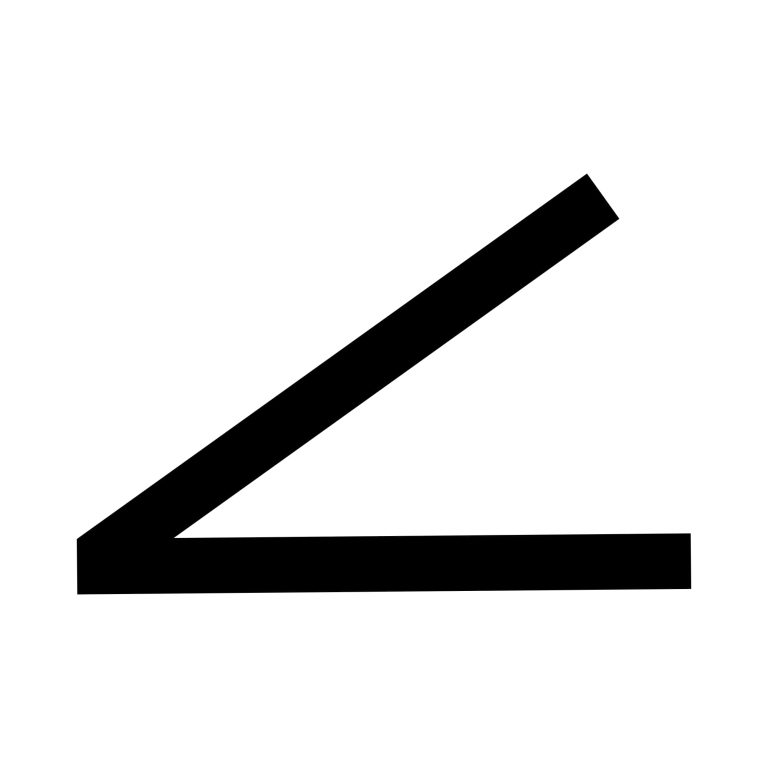
Meaning of the Semi-Square Aspect in Astrology
The semi-square is one of the most intriguing minor aspects in astrology. It occurs when two planets—or a planet and an angle—are separated by 45 degrees. Because it is a subtle aspect, astrologers typically use a very small orb, usually no more than 1–2 degrees. As its name implies, the semi-square is essentially half of a square aspect. Like the square, it is associated with tension, friction, and challenges. However, its influence is generally “less intense” and more understated. Rather than producing constant pressure, the semi-square often operates in the background, surfacing periodically through moments of discomfort, frustration, or inner restlessness.
Despite its subtle nature, it can be a powerful catalyst for growth and self-improvement. This aspect is frequently linked to external circumstances that force adjustment. These situations may arise unexpectedly as changes, complications, or difficult decisions that require attention. Often, they stem from smaller issues that have been “ignored” for too long. What initially seems insignificant can gradually develop into a problem that can no longer be avoided. When approached consciously, the semi-square can become a valuable tool for personal development. Rather than creating overwhelming crises, it encourages gradual refinement and ongoing self-correction. The astrological symbol for the semi-square is ∠. The semi-square belongs to the same family of aspects as the square and the sesquiquadrate, sometimes referred to as the octile series or 2-series aspects.
These aspects are considered analytical in nature because they reveal areas of tension that encourage learning, adaptation, and growth. However, unlike the square, the semi-square’s challenges are not always “obvious”. Because the discomfort is subtle, people may overlook it or choose to ignore it, missing opportunities for improvement. This aspect often represents low-level friction that quietly persists beneath the surface. It does not demand immediate action in the way a square often does, but it creates an ongoing sense that something needs adjustment. The tension may be “mild”, yet it remains present, preventing complete comfort or complacency.
Highlights of the Semi-Square
Many astrologers describe the semi-square as a small but persistent irritant. It is like a grain of sand inside an oyster, a dripping faucet, an uncomfortable shoe, or a conversation that remains unfinished. While seemingly minor, it continually draws attention to areas that need refinement. Traditionally, the semi-square has been viewed as a “mildly” difficult aspect. It creates challenges without the dramatic force or clarity associated with major hard aspects. Where a square may confront a person with an obvious obstacle, the semi-square often manifests as subtle dissatisfaction that is easy to rationalize or dismiss. Geometrically, the 45-degree angle belongs to the octile family of aspects, which are associated with adjustment, refinement, and small-scale crises that encourage growth.
Positioned between the conjunction and the sextile, the semi-square occupies a middle ground that is neither fully harmonious nor intensely disruptive. Because it is considered a minor aspect, its effects often operate below conscious awareness. A person may simply experience an ongoing feeling that something is slightly “out of place” without being able to identify exactly what it is. The semi-square creates a gentle but persistent pressure to improve, modify, and fine-tune different areas of life. When integrated positively, this aspect becomes a source of adaptability and continuous development. It encourages “awareness” of small problems before they become major difficulties. The semi-square teaches the importance of making minor corrections along the way rather than waiting for a crisis to force change. As a result, it can help cultivate flexibility, responsiveness, and a willingness to evolve.
In its more difficult expression, the semi-square may create chronic dissatisfaction or a sense of never being fully content. The individual may find themselves constantly adjusting, analyzing, or searching for improvements without ever feeling completely “settled”. This can appear as perfectionism, excessive criticism, restlessness, or a tendency to focus on flaws in oneself or others. Because its influence is subtle, there is also a tendency to project the discomfort outward, blaming circumstances or other people for an internal tension that is actually calling for personal adjustment. The challenge lies in recognizing that the friction often originates from the relationship between the two planetary energies involved. The lesson of the semi-square is learning to distinguish between productive discomfort and unnecessary worry.
Some tensions indicate areas that genuinely require change, while others are simply part of life’s natural complexity. Wisdom comes from knowing when to act and when to accept imperfection. Ultimately, the semi-square teaches that growth does not always arrive through dramatic events or major turning points. Sometimes the most “meaningful” transformation occurs through small, consistent adjustments. It reminds us that evolution is often a gradual process—one built on paying attention to subtle signs, addressing minor imbalances, and responding to persistent discomfort before it develops into something larger. Rather than announcing itself through upheaval, the semi-square often speaks quietly, encouraging steady refinement and continuous personal growth.